
If you’ve lived on the Gulf Coast, you know the trepidation that comes from watching a tropical depression turn into a named storm – and the devastation that follows landfall. The costs that follow the destruction are staggering, with hurricanes Sandy, Harvey, and Ian each causing over $100 billion in inflation-adjusted damage. You likely saw the effects of at least one of these storms in your community – or even your own home – and wished for a solution to prevent such hardship in the future.
Fortunately, there is now a series of techniques that have been proven to strengthen your home against powerful winds. In total, these techniques are called the FORTIFIED Construction Method, and when implemented properly, you can rest assured that you are protected by a FORTIFIED Home.
So, in this article we will explore some key questions: What exactly is a FORTIFIED Home? Is a FORTIFIED Roof included in a FORTIFIED Home? Is the FORTIFIED Construction Method worth the investment? And most importantly, how can you apply it to your home before the next storm?
Who Created the FORTIFIED Home and FORTIFIED Roof Construction Methods?
The Insurance Institute for Business & Home Safety [IBHS] created the FORTIFIED Home standards, including FORTIFIED Roof. This organization is an independent, non-profit research organization, but it is supported by the insurance industry.
Since opening in 1977, IBHS has been providing technical data on building codes and retrofits. Then in 2010, they built a world-class research center where they subject full-scale homes to manufactured hurricanes, hailstorms, and wildfires.
By identifying the most common weaknesses for homes during storms, the IBHS created the FORTIFIED Construction Method to reduce such failures in the future. In their own words, “IBHS’s groundbreaking research is closing gaps in building science to strengthen the nation’s resilience against the growing threat of severe weather.”
What are the FORTIFIED Construction Standards?
FORTIFIED is a voluntary construction and re-roofing standard that goes beyond traditional building codes to provide added protection from strong winds and other severe weather. There are three tiers of protection outlined in the FORTIFIED Home program – FORTIFIED Roof, FORTIFIED Silver, and FORTIFIED Gold, with each representing an increasing level of wind protection for your home. Let’s explore these standards in detail.
FORTIFIED Roof
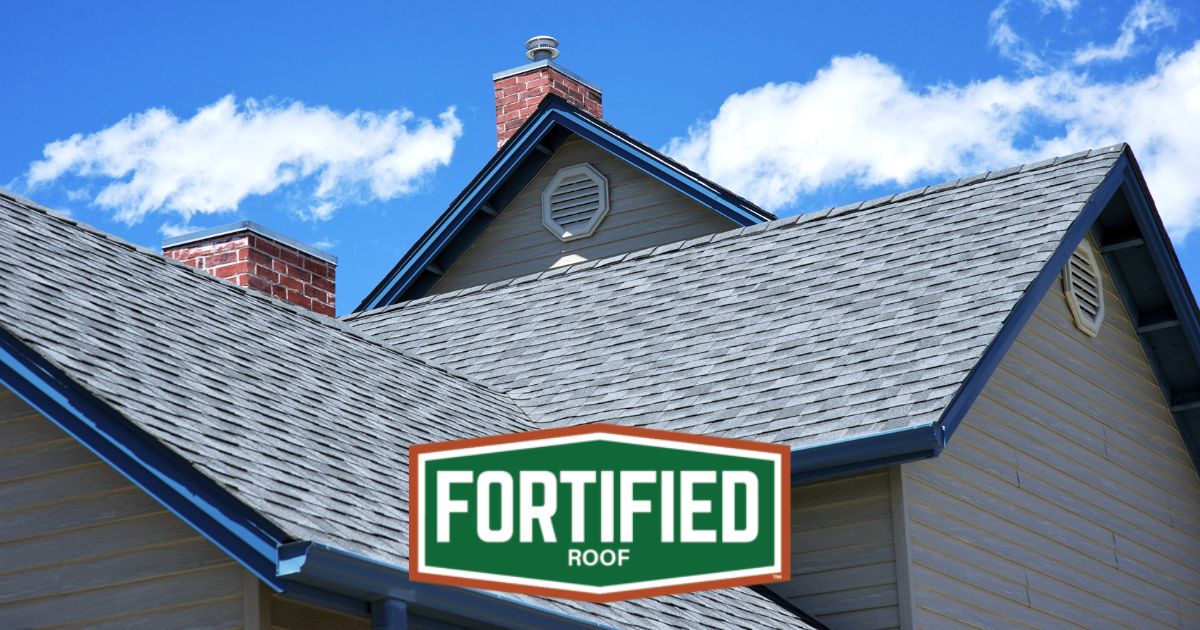
The most common upgrade that homeowners on the Gulf Coast choose is the FORTIFIED Roof. It applies several enhancements to the standard roof installation that result in higher wind resistance and less damage during storms.
With a properly installed FORTIFIED Roof, your home will have:
- Enhanced Roof Deck Attachment
- Sealed Roof Deck
- Locked Down Roof Edges
- Impact-resistant Roof Covers
- Wind and Rain-Resistant Attic Vents
If you choose a FORTIFIED Roof, damage should be reduced significantly during the next storm. But that’s not all. Your warranty will also be enhanced to protect against stronger winds, when compared with a standard installation warranty.
Further, if you are interested in these features for your home, you may be eligible to receive $10k toward your new FORTIFIED Roof. Keep reading to learn more.
FORTIFIED Silver
The FORTIFIED Silver standard includes everything in the FORTIFIED Roof, plus protection for the “openings” and “attachments” of your home – like windows, doors, and chimneys. This tier of protection includes additional features that help to keep your family safe and reduce damage to the structure of your home during a storm.
Here are the additional requirements needed to meet the FORTIFIED Silver standard.
- Impact Protection for Windows & Doors
- Impact & Pressure-Rated Garage Doors
- Chimney Bracing
- Reinforced Soffits
- Anchored Attached Structures
- Gable End Bracing
Reinforced doors keep pressure and winds from entering your home during a storm – lowering the risk of blown-out walls and collapsed roofs. Further, attached structures are adhered using strong anchors and additional bracing which reduce the risk of holes forming in your home – or even total collapse – during a storm.
FORTIFIED Gold
As the name suggests, the FORTIFIED Gold standard is the highest level of protection in the FORTIFIED Home program. A home that meets this standard has everything in the FORTIFIED Roof and FORTIFIED Silver standards, plus:
- Pressure-rated Windows & Doors
- Stronger Exterior Sheathing
- Engineered Roof-to-Wall Connections
- Engineered Story-to-Story Connections
- Engineered Wall-to-Foundation Connections
While traditional building methods rely on gravity and the weight of your home to keep it standing, the IHBS found that these factors were not enough to withstand the most dangerous storms. The FORTIFIED Gold construction standard specifies how the roof should be fixed to the walls and how the walls should be fixed to the foundation to create a continuous load. This singular, solid structure provides maximum protection from storms and hurricanes.
How Does A FORTIFIED Roof Protect Your Home?
To understand the ways in which a FORTIFIED roof protects your home, you first need to understand the main reasons that roofs fail during storms. Wind “uplift” occurs when fast-moving air is caught underneath the shingles or roof edge and puts upward pressure on these vulnerable areas. Then, water intrusion occurs when shingles have been removed by wind, and rain soaks the plywood underneath – leading to leaks in your home. A FORTIFIED Roof goes beyond traditional building codes to protect against these threats with the following enhancements.
Stronger Edges
Wind “uplift” on the edges of a roof can rip the shingles and decking off your home, so a FORTIFIED Roof has a wider drip edge and a fully adhered starter strip. These adjustments make it much less likely that a strong wind will disconnect the roof from the home or the shingles from the rest of the roof.
Better Attachment
A standard roof has shingles attached with smooth nails, which can be pulled out of the wooden decking with a strong wind – similar to removing a nail with a claw hammer. A FORTIFIED Roof uses ring-shank nails, which have ridges that “lock” into the wood, and these nails are used in an enhanced pattern. The combination of ridged nails and the specialized pattern keep shingles in place when standard roofs fail.
Wind and Rain Resistant Attic Vents
Strong winds are not just a threat to your shingles. They can also pull attic vents loose and allow water and pressure to enter your home. A FORTIFIED Roof is installed with specific attic vents that are wind and rain resistant to provide an additional layer of protection for your roof.
Impact-Resistant Roof Covers
If you choose the optional Hail Supplement when installing your FORTIFIED Roof, you’ll also receive upgraded roof covers – like shingles, metal, or tile. The upgraded roof cover must meet rigorous testing and rating requirements to qualify for the FORTIFIED Home standard.
Sealed Roof Deck
Another layer of safety for FORTIFIED Roofs comes with the sealed roof deck. This involves adding a waterproof membrane over the wooden decking which keeps your home watertight, even if some shingles blow off during a storm.
Altogether, the enhancements of a FORTIFIED Roof protect your home from the biggest threats that storms present – wind, pressure, water, and impact. With these upgrades, your family is much more likely to remain safe and dry during storm season.
Financial Advantages of a FORTIFIED Roof
The most obvious financial advantage of a FORTIFIED Roof is less money spent on repairs after a storm. However, there are also other financial incentives that you may not have considered – lower insurance premiums, a higher home value, and grant programs to reduce the cost of installation.
Lower Insurance Premiums
In coastal areas, insurance companies offer discounts for homes that have FORTIFIED Home designations. These homes have a lower risk of total loss, so the “wind premium” of their monthly bill is greatly reduced.
For example, the IBHS shows that homes in coastal Alabama receive a 25% to 35% discount when they meet the FORTIFIED Roof standard. This is further increased for homes with the FORTIFIED Silver or Gold designations – providing discounts of up to 55%.
Increased Resale Value
Data from the University of Alabama indicates that FORTIFIED Homes sell for nearly 7% more than non-FORTIFIED homes. This proves buyers in our area value the peace of mind and the lower monthly insurance costs.
Grants May Be Available to Help Cover Installation Cost
The benefits of the FORTIFIED construction methods serve communities as well as individual homeowners, so state programs across the Gulf Coast offer grants to upgrade residential roofs. Mississippi suspended funding for their grant program in 2025, but Louisiana and Alabama still offer support.
In Louisiana, the program is called the Louisiana Fortify Homes Program, and it provides up to $10,000 to eligible homeowners for FORTIFIED Roof upgrades. Similarly, in Alabama, the Strengthen Alabama Homes program offers up to $10,000 to cover the cost of a FORTIFIED Roof.
To learn more about the Strengthen Alabama Homes grant program, refer to our hub of information and application tips. Also, don’t forget to sign up for our mailing list for reminders and exclusive tips gathered from our vast experience with the program.
Should Your Home Meet the FORTIFIED Roof Standard?
The short answer is – yes! If you live on the Gulf Coast, a FORTIFIED Roof offers a break from the constant worry about storm damage, plus some potential for financial rewards.
However, you must choose the right roofing contractor to install your FORTIFIED roof. Only certified roofers who have undergone specific IBHS training can install these systems correctly and help you get the certificate needed to claim your insurance benefits. If you’re on the Gulf Coast, Complete Roofing is your local FORTIFIED expert!
Get Your FORTIFIED Roof from Complete Roofing
At Complete Roofing, we can install a FORTIFIED Roof for your new construction home or replace your old roof with a wind-resistant one. Our team is certified with the FORTIFIED program, and we have installed hundreds of roofs to this rigorous standard.
To learn more about the FORTIFIED program or get started today, use the information below to contact a roofer in your area.
Installation and Repair Services for Roofs and Gutters are available in the following locations:
- Coastal Alabama Main Office with local agents in:
- Coastal Mississippi Main Office with local agents in:
- Greater New Orleans Main Office with a local agent in: